1. Ethiopia’s Bold EV Policy: A Global First
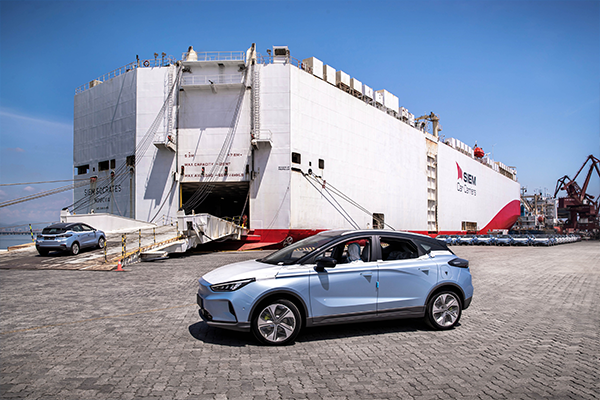
In January 2024, Ethiopia made history by becoming the first country in the world to ban all imports of gasoline and diesel-powered vehicles for personal use. This unprecedented move, enacted through the Council of Ministers Regulation on Vehicle Import Control, was driven not primarily by climate concerns but by urgent fiscal and energy sovereignty pressures.
Ethiopia spends over $1.4 billion annually on vehicle fuel imports—a crippling drain on foreign exchange reserves for a country that defaulted on sovereign bonds in 2023 and subsequently secured a $3.4 billion IMF support package. By eliminating fossil fuel vehicle imports, the government aims to redirect hard currency toward domestic priorities while leveraging the country’s abundant renewable energy capacity.
The results have been dramatic. Within just two years, EV adoption surged from less than 1% to nearly 6% of vehicles on Ethiopian roads—exceeding the global average of roughly 4%. The Ministry of Transport reports that approximately half of all new cars sold in 2024 were electric, and cumulative EV registrations reached over 140,000 units by early 2026.
2. Tax Incentives & Import Tariff Structure
Ethiopia’s EV policy is reinforced by a highly favorable tariff regime designed to make electric vehicles price-competitive with the used gasoline cars that previously dominated the market:
| Vehicle Type | Import Duty | VAT | Total Tax Burden |
|---|---|---|---|
| Fully Assembled EV (CBU) | 15% | 15% | ~32% |
| Semi-Knocked Down (SKD) | 5% | 15% | ~21% |
| Completely Knocked Down (CKD) | 0% | 15% | 15% |
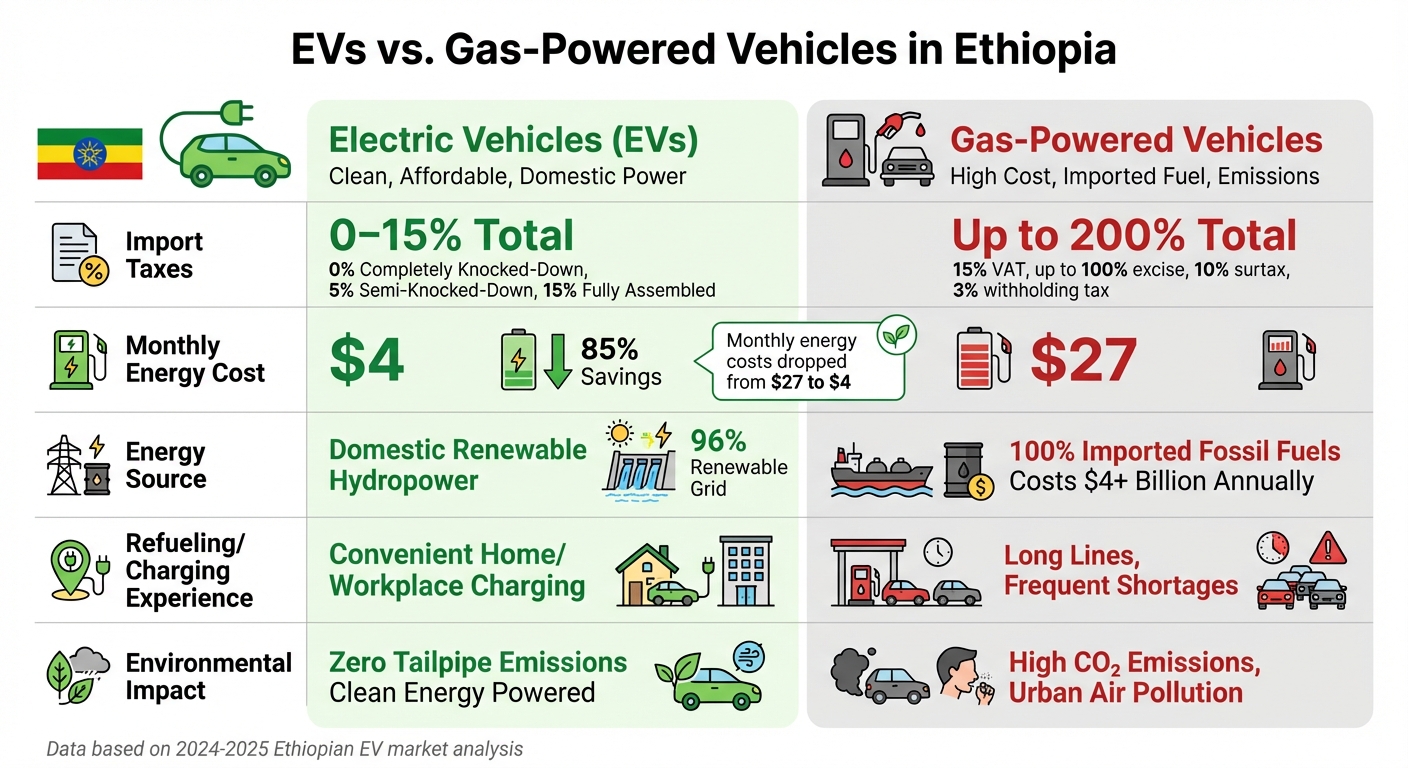
| Used Gasoline Cars (pre-ban) | Up to 200% | 15% | Up to ~230% |
Table: Ethiopia EV Import Tax Structure vs. Former ICE Rates
This tariff differential has created immediate price parity. A BYD Seagull now sells for approximately 3.6 million Ethiopian birr (~$23,000) in Addis Ababa, compared to over 4.2 million birr for some used gasoline sedans before the ban. For fleet operators and commercial importers, the CKD route offers the most compelling economics, with zero customs duty and significant local value-add potential.
The government has also introduced tax exemptions for natural gas-powered cargo and public transport vehicles as part of a broader energy diversification strategy, though EVs remain the primary focus for passenger and light commercial segments.
3. Charging Infrastructure: From Bottleneck to Backbone
Recognizing that vehicle supply must be matched by charging capacity, Ethiopia is executing one of Africa’s most ambitious EV infrastructure rollouts:
- Ethiopian Electric Utility (EEU) is implementing a two-phase plan to install 2,300 charging points nationwide, including approximately 1,176 in Addis Ababa alone.
- Phase 1 (2025-2026): 40 stations, primarily in Addis Ababa and surrounding cities. Three stations are already operational, with 32 more launching in the capital and 8 in nearby urban centers.
- Phase 2: Expansion to regional cities including Bishoftu, Mojo, Adama, Shashemene, and Hawassa.
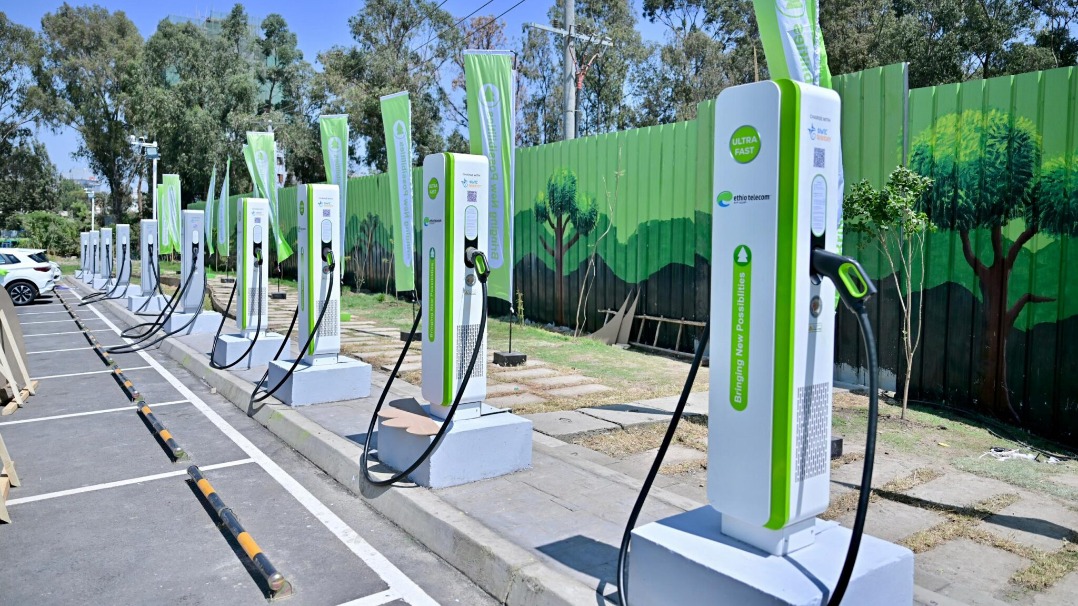
- Ethio Telecom has launched four Super-Fast EV Charging Hubs in Addis Ababa and Adama, featuring 600 kW ultra-fast chargers capable of full charging in ~15 minutes. These hubs have already served over 284,000 charging sessions and dispensed 7,159 MWh of electricity in their first year.
Electricity pricing is highly competitive at 14-18 Ethiopian birr ($0.09-$0.12) per kWh, supported by the Grand Ethiopian Renaissance Dam (GERD) which generates 5,150 MW of clean hydropower. This gives Ethiopia one of the lowest EV operating costs globally—monthly energy expenses can drop from ~$27 (gasoline) to just $4 (electric).
4. Local Assembly & Industrial Development
Ethiopia’s EV strategy extends beyond imports to domestic manufacturing capacity building:
- 17 EV assembly plants are currently operational in the country.
- The government targets 60 assembly plants by 2030.
- 500,000 EVs by 2032 is the official national target.
- Chinese brands—BYD, Chang’an, Geely, and Leapmotor—dominate showrooms, with BYD alone accounting for a significant share of new EV sales.
- The Ministry of Transport now mandates that EV importers and assemblers contribute to charging infrastructure development, preventing the classic “chicken-and-egg” problem.
This industrial push creates opportunities not just for vehicle exporters but for production line technology partners, battery suppliers, and charging equipment manufacturers.
5. Market Size & Growth Projections
The African EV market was valued at $17.58 billion in 2025 and is projected to reach $42.34 billion by 2034, growing at a CAGR of 10.26%. Ethiopia stands out as a high-growth outlier within this landscape:
- Vehicle ownership: Only ~13 cars per 1,000 people (vs. African average of 73), indicating massive latent demand.
- Fleet composition: ~1.7 million total vehicles for a population of 130 million.
- EV penetration: Already at 4.7% of passenger car stock share—comparable to Europe and Vietnam.
- Public transport: Addis Ababa has deployed 100+ electric buses with plans for significant fleet expansion.
6. Supply Chain & Logistics: The China-Ethiopia Corridor
For B2B importers, understanding the logistics chain is critical:
- Primary Port: Djibouti (Ethiopia is landlocked)
- Transport: Sea freight from Chinese ports → Djibouti Port → Trucking to Addis Ababa
- Documentation Required:
- Commercial Invoice
- Packing List
- Bill of Lading / Air Waybill
- Certificate of Origin
- Import Permit (Ministry of Trade)
- Certificate of Conformity (COC)
- Vehicle Type Approval Certificate
- Special Requirement: UN Class 9 hazardous materials certification for lithium battery shipments
- Insurance: “All-Risks” coverage recommended for battery transit protection
Chinese EV exports to Africa surged from ~4,000 units in 2023 to ~25,000 in 2025, with BYD’s market share jumping from 4% to 35% across the continent. Ethiopia is positioned as a priority destination given its policy clarity and tariff advantages.
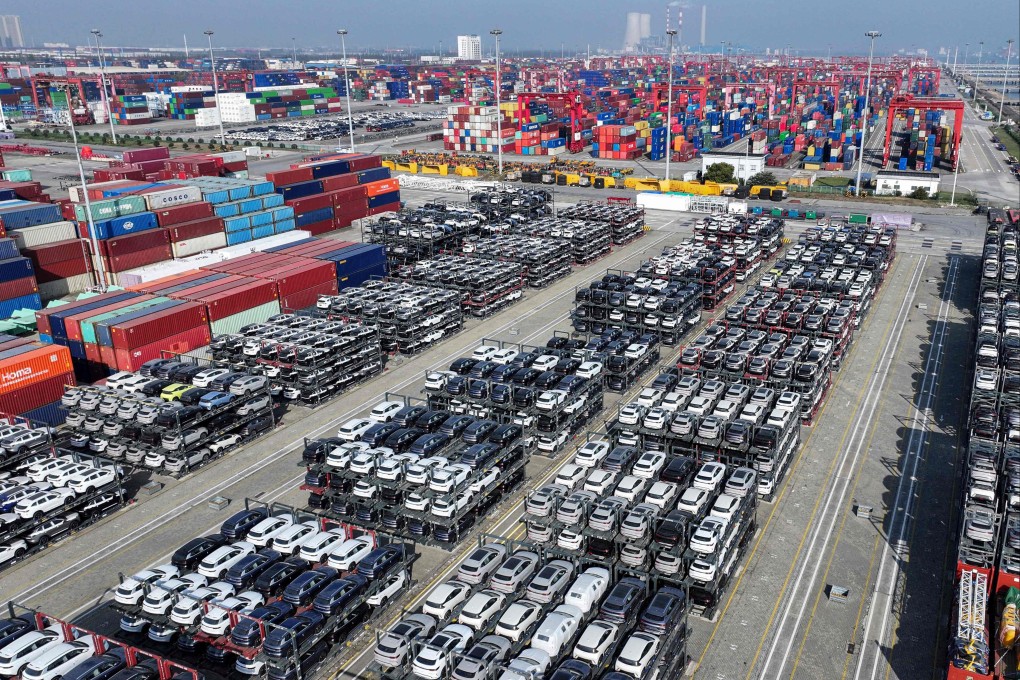
7. CAUTO Global: Your EV Export Partner for Ethiopia
Navigating Ethiopia’s rapidly evolving EV landscape requires a supply chain partner with deep China-Africa logistics expertise and multi-brand vehicle access. China Automotive Global Supply Chain Co., Limited (CAUTO) is positioned to support Ethiopian importers, fleet operators, and government procurement teams with:
- Multi-brand EV sourcing: Good supplier for BYD, Geely, Chang’an, Leapmotor, and other leading Chinese manufacturers
- Flexible import formats: CBU, SKD, and CKD configurations tailored to your tariff optimization strategy
- End-to-end logistics: From Chinese factory floor to Djibouti Port to Addis Ababa delivery
- Compliance support: Documentation, COC, and type approval assistance for Ethiopian customs
- After-sales infrastructure: Spare parts supply, technical training, and battery management systems
Whether you are launching a ride-hailing EV fleet in Addis Ababa, expanding a public transport electric bus network, or establishing a local CKD assembly plant, CAUTO provides the supply chain reliability that Ethiopia’s ambitious EV targets demand.
8. Challenges & Risk Mitigation
Despite the compelling policy framework, Ethiopian EV market entrants should prepare for:
| Challenge | Mitigation Strategy |
|---|---|
| Grid reliability | Solar-hybrid charging solutions; battery storage integration |
| Skilled technician shortage | Partner with suppliers offering training programs (CAUTO provides technical certification support) |
| Charging station deployment lag | Verify station operational status before fleet deployment; prioritize home/workplace charging |
| Currency volatility | Structure payments in stable currencies; utilize CKD models to reduce upfront capital exposure |
| Regulatory evolution | Monitor Ministry of Transport directives; engage local legal counsel for compliance updates |
9. Frequently Asked Questions (FAQ)
Q1: Can I still import used gasoline cars to Ethiopia?
No. Since February 2024, Ethiopia has banned all imports of fossil fuel-powered vehicles for personal use. Only electric vehicles (and natural gas commercial vehicles under specific exemptions) may be imported.
Q2: What is the cheapest way to import EVs into Ethiopia?
The CKD (Completely Knocked Down) route offers the lowest tax burden at 0% import duty + 15% VAT. However, this requires local assembly capability. For immediate market entry, CBU (fully assembled) at 15% duty remains viable given the competitive pricing of Chinese EVs.
Q3: How many charging stations does Ethiopia currently have?
As of early 2026, approximately 500 public chargers are operational, mainly in Addis Ababa. The government plans 2,300 charging points nationwide, with Ethio Telecom alone operating hubs capable of serving 60 vehicles simultaneously.
Q4: Which Chinese EV brands are most popular in Ethiopia?
BYD leads market share, followed by Chang’an, Geely, and Leapmotor. BYD models like the Seagull and Yuan Up are price-competitive with pre-ban used gasoline vehicles.
Q5: Is local EV assembly profitable in Ethiopia?
Yes. With 17 plants already operational and government targets of 60 by 2030, the CKD/assembly segment is actively supported. The zero-duty on CKD kits, combined with Ethiopia’s low electricity costs, creates favorable unit economics for assemblers.
10. Conclusion: Ethiopia as Africa’s EV Laboratory
Ethiopia has transformed from a fuel-dependent, used-car market into Africa’s most aggressive EV transition case study. The combination of:
- A world-first ICE import ban
- Highly favorable EV tariffs (0-15% vs. former 200%+ for gasoline)
- Abundant renewable electricity ($0.10/kWh)
- Rapid charging infrastructure deployment
- Strong government industrial targets
creates an unmatched B2B opportunity for vehicle exporters, assembly partners, and charging infrastructure investors.
For Ethiopian businesses and international operators seeking a reliable China-based EV supply chain partner, China Automotive Global Supply Chain Co., Limited (CAUTO) offers the multi-brand access, logistics expertise, and compliance support necessary to capitalize on this historic market shift.
Contact CAUTO Global today to explore tailored EV procurement, SKD/CKD assembly line solutions, and fleet deployment strategies for the Ethiopian market.
By CAUTO Global Team | Published May 2026
Keywords: electric vehicle Ethiopia, EV policy Ethiopia, EV import Ethiopia, new energy vehicle Africa, China EV export to Ethiopia, EV charging infrastructure Ethiopia, electric bus Ethiopia, CKD assembly Ethiopia, BYD Ethiopia, Addis Ababa EV fleet